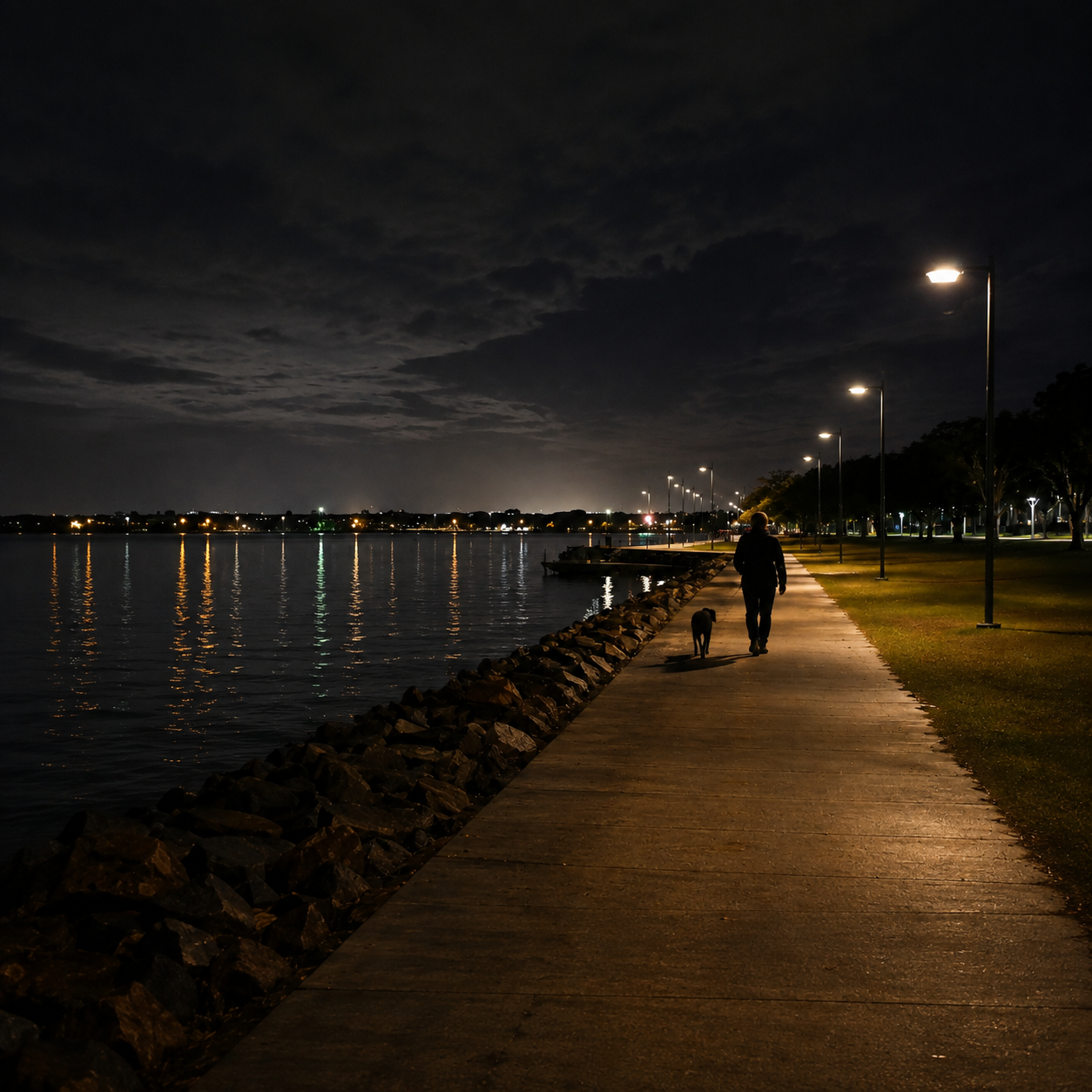
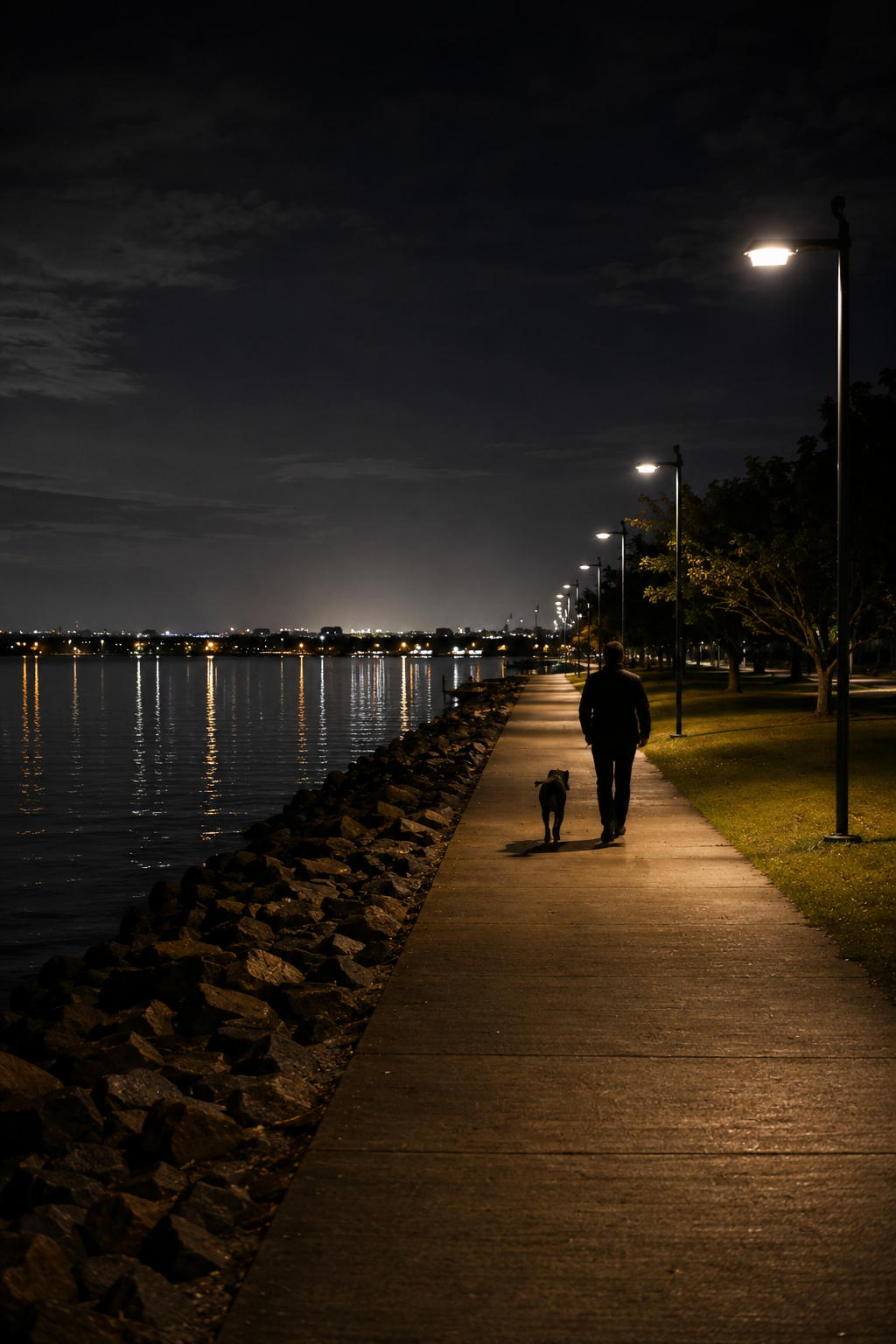
Early and late walks can be wonderful — a little planning helps keep them that way.
Walking your dog alone early or late? Our top tips for staying safe
For many dog owners, early mornings and evenings are the best times to walk. It’s cooler, quieter and often much more pleasant than heading out in the heat of the day.
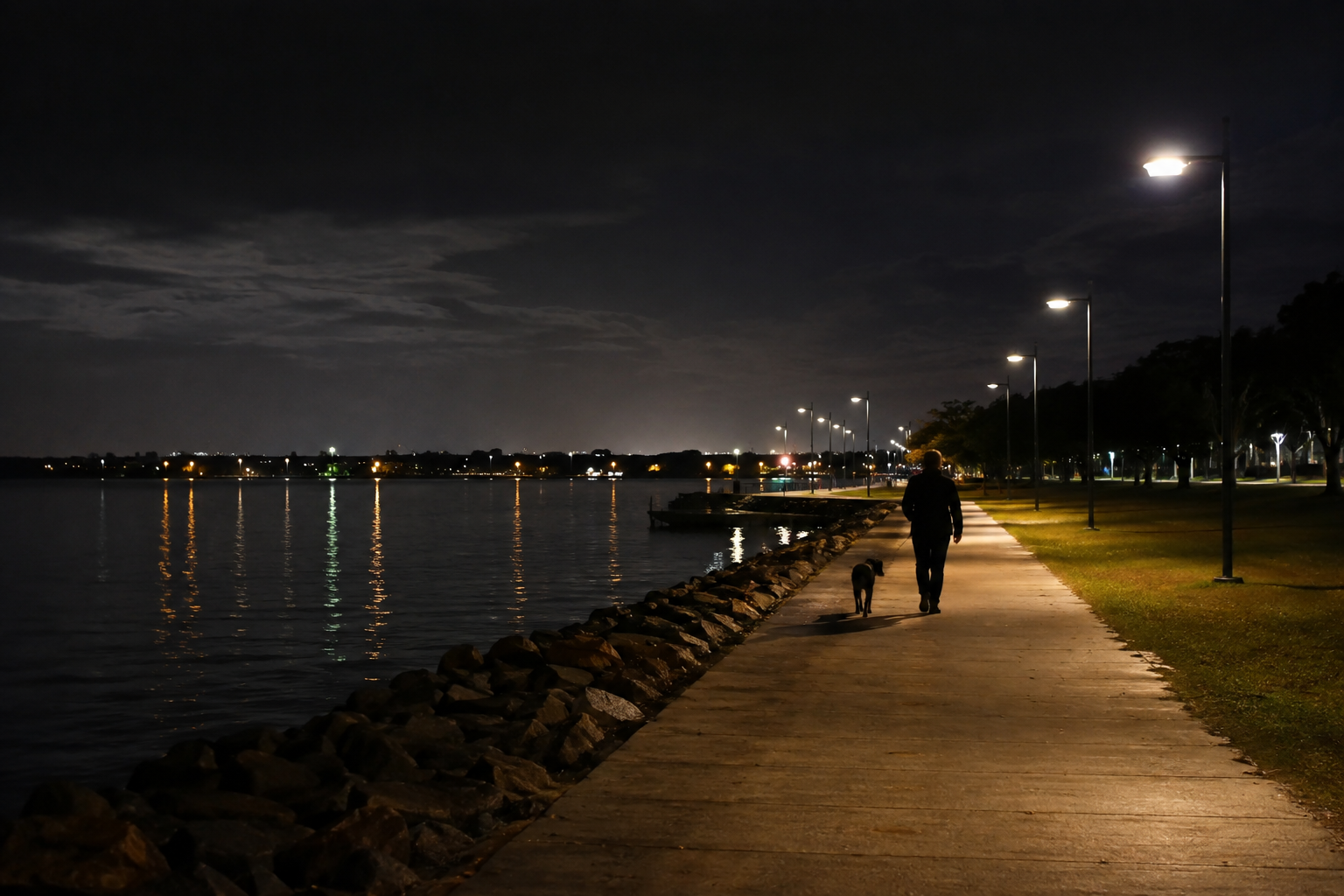
Here in Wynnum-Manly, we’re particularly lucky. The waterfront is a wonderful place to walk, and even early in the morning or later in the evening you’ll generally encounter other walkers, runners and dog owners along the more popular sections. Much of the foreshore is also relatively well lit.
But walking alone in the dark does call for a little extra common sense.
After hearing many years ago about a reported assault on the Wynnum North boardwalk, Caroline became much more conscious of where — and when — she walks alone.
That doesn’t mean being frightened to go out. It simply means making a few sensible choices before you leave home.
Choose your route carefully
There’s a big difference between walking along a well-used section of the Esplanade and heading down an isolated boardwalk, reserve or poorly lit track when hardly anyone else is around.
Choose familiar routes where possible, preferably with lighting, passing traffic, houses, businesses or other people nearby. And remember that 5 am can be every bit as dark and deserted as 10 pm.
Think about your exits too. If something made you uncomfortable, could you cross the road, turn down another street or head towards other people?
If you regularly walk very early or late, particularly if you live alone, consider letting someone know where you’re going and roughly when you expect to be home.
Keep your eyes — and ears — open
Headphones and darkness are not a great combination.
You want to hear the bicycle approaching from behind, footsteps nearby, a car pulling out, another dog coming around a corner or anything else that might require you to react.
Take your phone and carry it somewhere you can reach it quickly rather than buried at the bottom of a bag. But resist the temptation to spend the walk looking at the screen.
A small torch or headlamp is useful, while reflective clothing or a light on your dog can make both of you easier for motorists and cyclists to see.
And don’t overlook your feet. Wear shoes you can walk comfortably and confidently in. If you suddenly need to move quickly or manage an unexpected dog encounter, you don’t want your footwear making the job harder.
You don’t have to stop and talk
One of the pleasures of walking a dog is the people you meet, and the overwhelming majority of those encounters are completely harmless.
Someone behaving a little unusually isn’t necessarily a threat either. Don’t make assumptions about why a person might look or behave differently. But you also don’t owe a stranger a conversation.
If somebody approaches you and the situation makes you uncomfortable, keep moving. A nod or quick smile may be all that’s needed before you walk on.
Pay attention to behaviour rather than trying to work out why somebody is behaving that way. If a person is aggressive or unpredictable, invades your personal space, follows you or refuses to leave you alone, move away and head somewhere you feel safer.
You don’t need to hang around to find out whether your instincts were right.
Have your dog’s back too
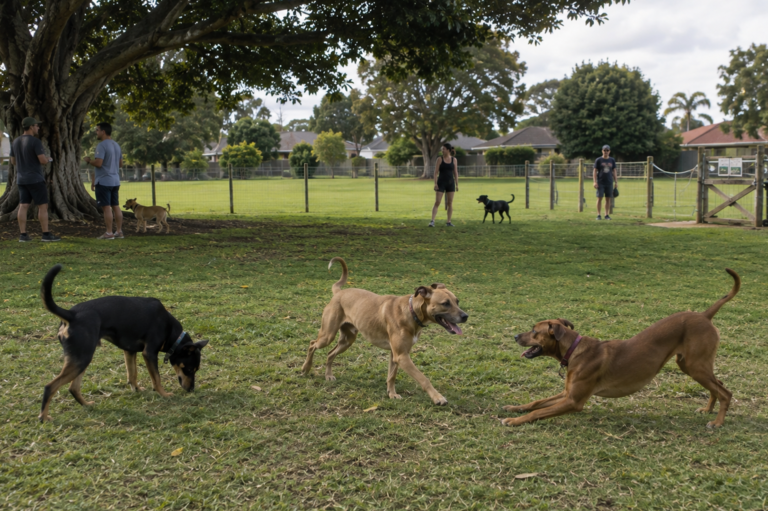
People aren’t the only potential problem. Loose dogs — and owners who allow their dogs to approach yours off lead — can turn a peaceful walk into a stressful one very quickly.
Caroline used to regularly encounter one fellow walking his dog off lead who would call out, “Don’t worry, he’s friendly.”
Her response?
“Well, one of mine isn’t. She’s very anxious and doesn’t like another dog approaching her.”
And that’s the point. It doesn’t matter how friendly the approaching dog supposedly is. Your dog may be elderly, injured, frightened, reactive or simply not want an unfamiliar dog rushing into their space.
Don’t wait until the dogs are nose to nose to decide there might be a problem. Cross the road, change direction or put yourself between your dog and the approaching dog. If the owner is present, clearly ask them to call or restrain their dog.
Having your dog’s back means spotting potential trouble early and taking action before your dog feels they have to deal with it themselves.
CLEAR THINKING
Stay alert, trust your instincts and act early. Whether the problem is a person or another dog, creating distance before trouble develops is usually your best option.
Teach your dog to leave with you
This is where training becomes part of safety.
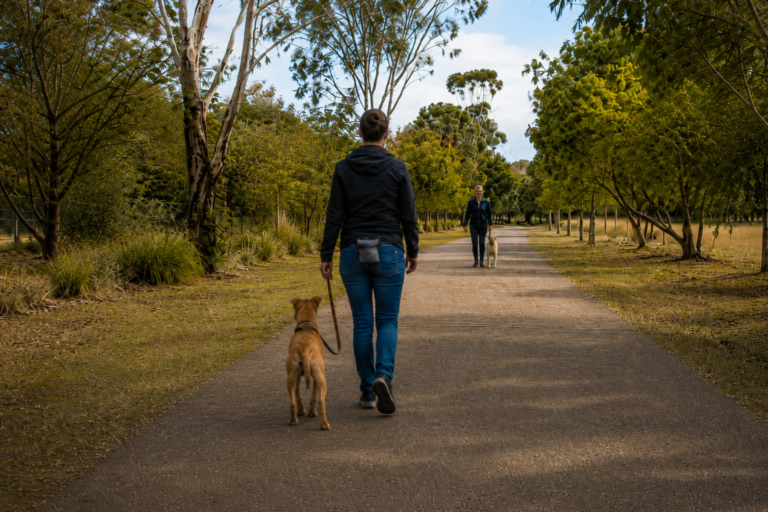
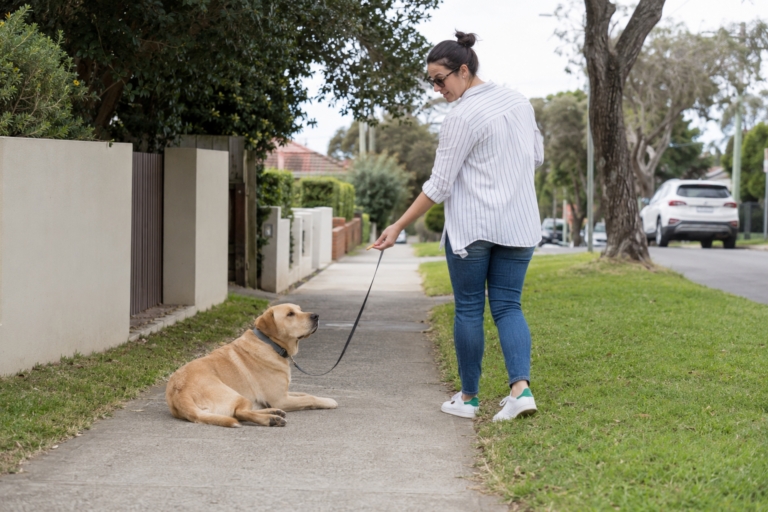
One of the most useful things you can teach your dog is an immediate change-of-direction cue. At CLEAR, we use cues such as “This way” and “Let’s go”.
Practise when nothing exciting is happening. Give the cue, change direction and reward your dog for immediately coming with you.
Then, if you see a loose dog, a person or any situation you would prefer to avoid, you don’t want to be dragging a dog that has planted all four feet and is staring at whatever is ahead.
You say, “This way”, turn — and your dog comes with you. It’s an extremely simple exercise with enormous practical value.
Carry useful equipment — not an arsenal
A few small items can be genuinely useful on an early or late walk.
Caroline carries citronella animal-deterrent spray. Products such as SprayShield are designed as animal deterrents and may give you another option if you’re confronted by a threatening loose dog.
Don’t substitute pepper or capsicum spray. There are legal restrictions around possessing and carrying these products in Queensland, including carrying them for self-defence.
A spare slip lead can also be useful. If you encounter a loose dog and circumstances make it safe to intervene, an extra lead may allow you to secure it.
A whistle or personal alarm is another lightweight way of attracting attention if you need help. Some walkers also carry an ordinary walking stick, which may be useful as a barrier if another dog approaches.
But think carefully before carrying anything specifically as a weapon. Apart from potential legal implications, something intended to protect you could potentially be taken from you and used against you.
The aim isn’t to head out prepared for battle. It’s to have a few sensible options and avoid confrontation whenever possible.
Check your dog’s equipment too
Before walking in darkness, check that your dog’s collar or harness fits securely and that the lead, clips and other equipment are in good condition.
A normal-length lead will generally give you more immediate control than a long line at night, particularly when visibility is limited.
And don’t rely on your dog to protect you. Even a large, imposing dog may behave very differently if frightened or confronted. Encouraging a family pet to act aggressively can create an entirely different set of problems.
Your best protection is still awareness, good decisions and getting yourself — and your dog — away early.
Be sensible, not frightened
None of this should put you off enjoying those lovely quiet walks.
Here in Wynnum-Manly, we’re fortunate to live in a lovely area with a beautiful waterfront and a wonderful environment for walking our dogs. On the more popular stretches of the foreshore, even early in the morning or later in the evening, you’ll generally find other walkers, runners and dog owners out enjoying it too.
The message isn’t to be worried. It’s simply to stack the odds in your favour.
Choose your route carefully. Stay aware of what’s happening around you. Carry a few useful items. Make sure your dog and their equipment are reliable. And be prepared to act early if either you or your dog needs more space.
A little forethought and a few sensible precautions can help make sure your early-morning or evening walk is memorable for all the right reasons.
MORE INFORMATION
For more personal-safety advice, visit the Queensland Police Service Adult Safety information page. Queensland Police Service — Adult safety