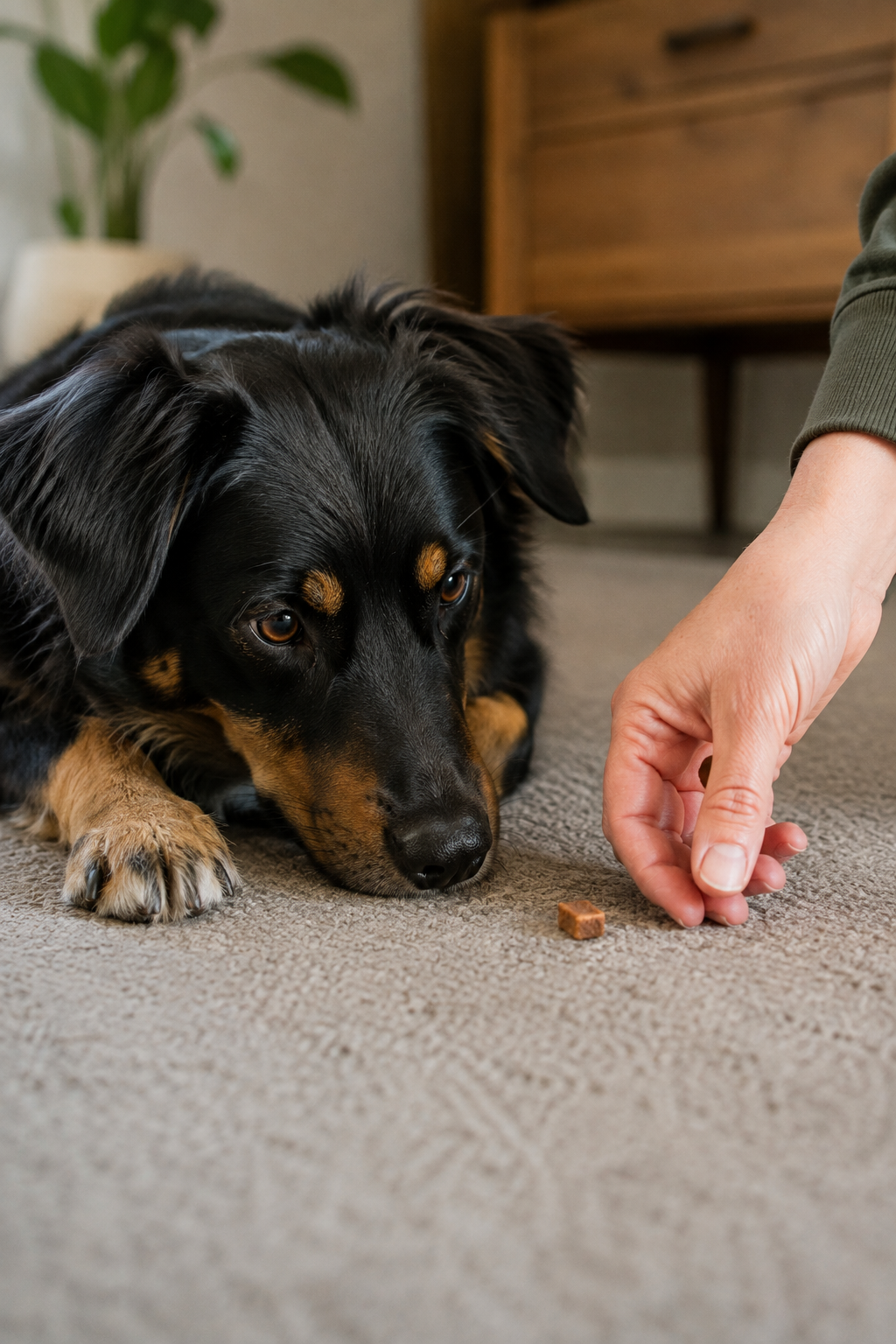
Rewards aren't bribes. They're one of the clearest ways to help dogs understand which behaviours earn good things.
Why treats work so well in dog training
One of the questions we’re asked most often at CLEAR Dog Training is: “How long do I have to use treats for?”
It’s a fair question. Many people ask it because they see treats as something they’d like to phase out as quickly as possible.
The answer, however, is a little more nuanced than that.
We use treats because they’re one of the quickest, clearest and most effective ways to build the behaviours we’d like to see. They’re certainly not the only reward we use, but when you’re teaching a brand-new behaviour, they’re often the most practical and efficient one available.
Modern positive reinforcement training isn’t about bribing dogs. It’s about rewarding the behaviours you want to see more often.
Rewards aren’t bribes
People often confuse rewards with bribes, but they’re completely different.
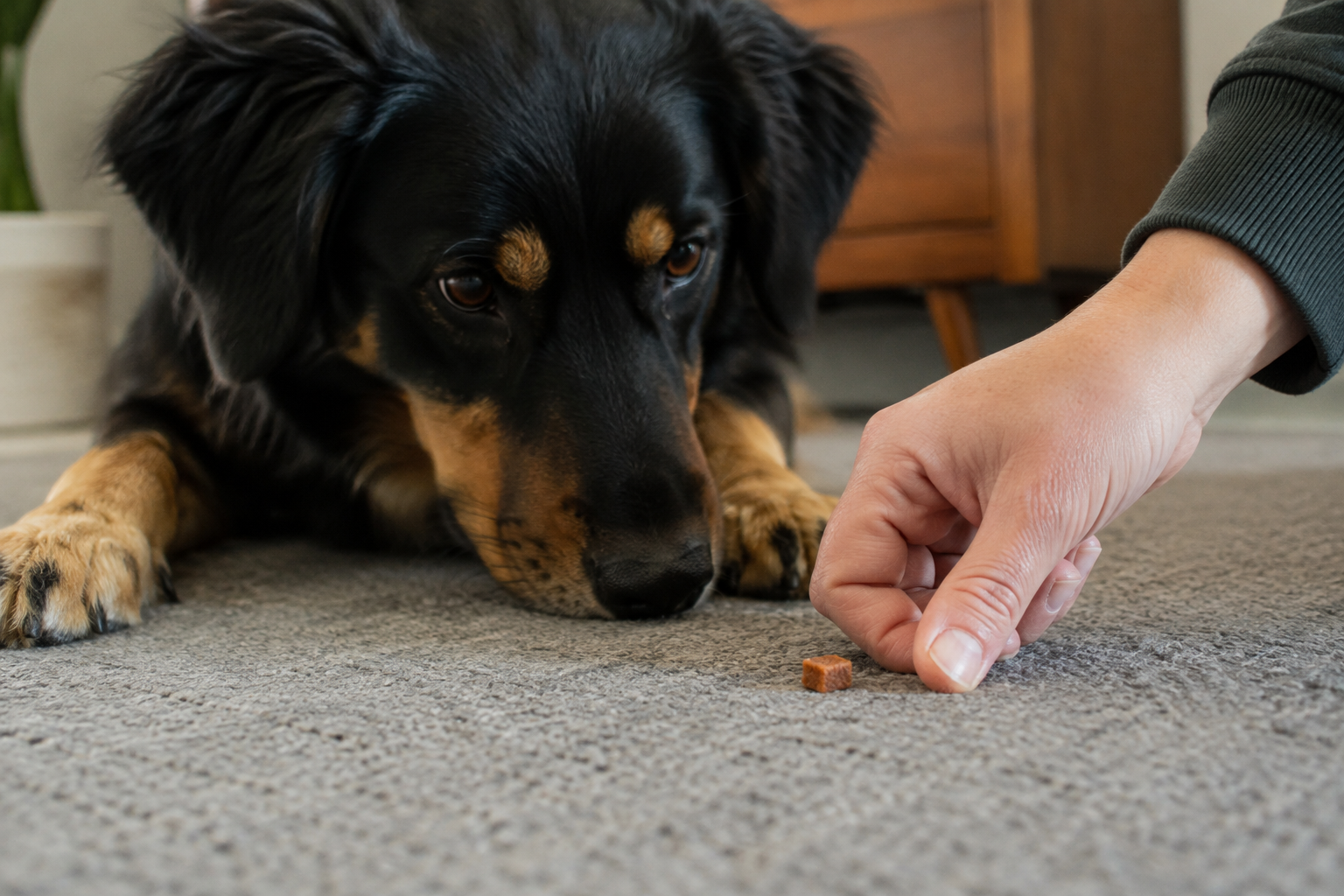
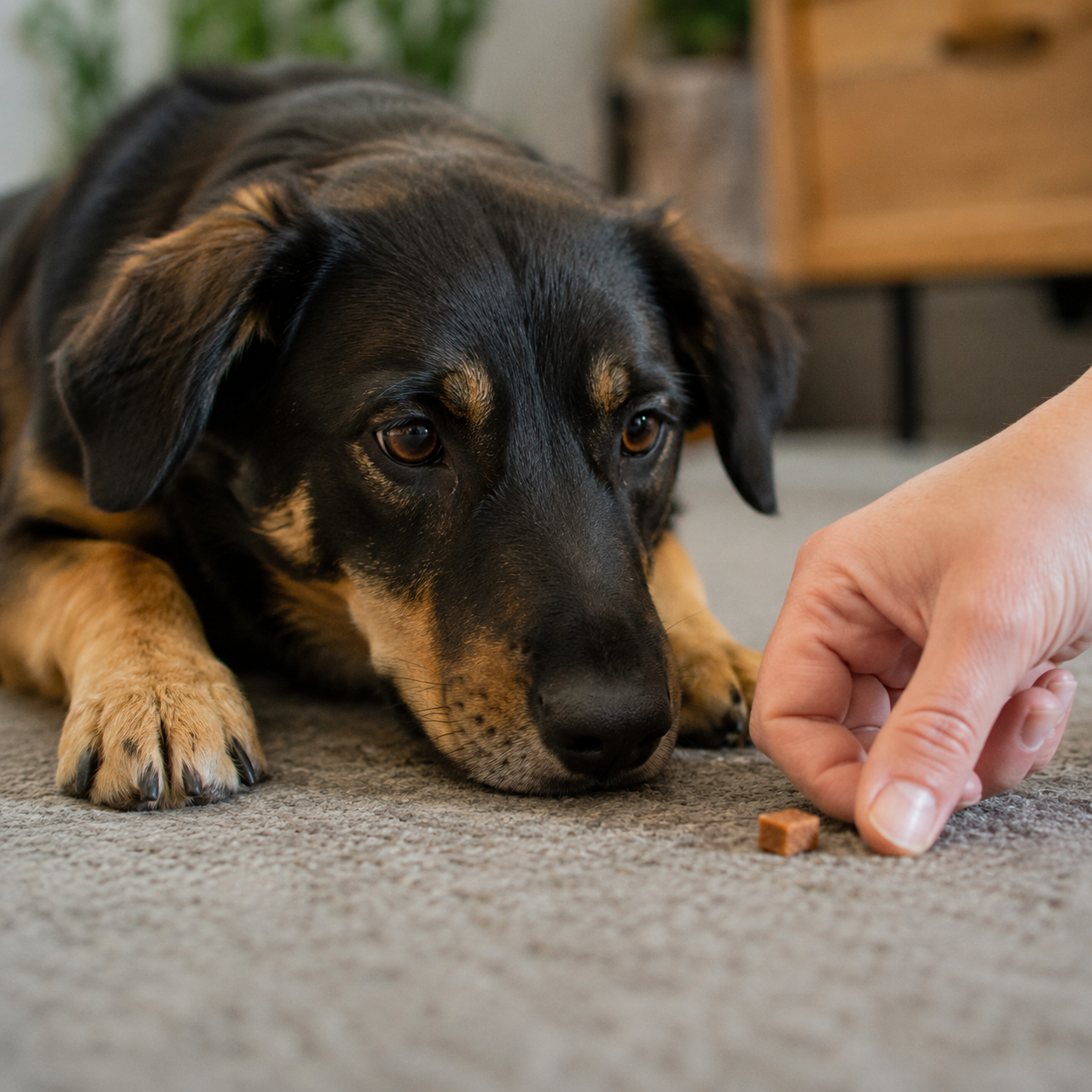
A bribe is shown before the behaviour in the hope of persuading someone to do something. A reward comes after the behaviour has been performed.
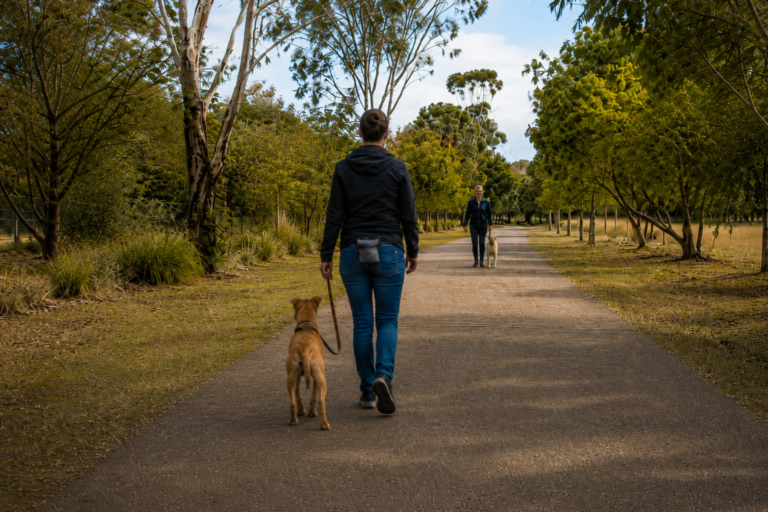
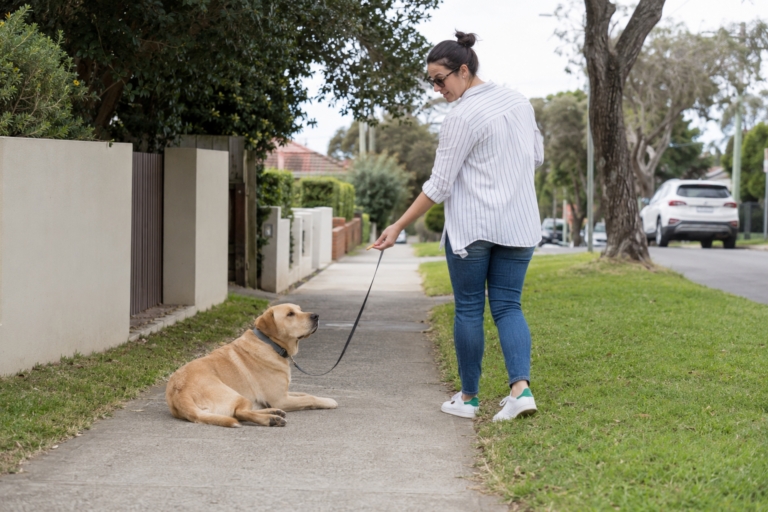
When your dog chooses to come when called, walks beautifully on a loose lead or settles quietly on their mat, rewarding them afterwards simply tells them, “Yes! That’s exactly what I was hoping for.”
Dogs repeat behaviours that lead to good outcomes. That’s how all animals learn.
If you want to build a behaviour, reward it
One of the fundamental principles of dog training is surprisingly simple. Behaviours that are rewarded become stronger and happen more often.
If your dog has developed a behaviour you’d rather they didn’t have, the quickest path usually isn’t punishment. It’s managing the situation so the unwanted behaviour can’t be practised while teaching and rewarding a better alternative.
That’s why rewards are such an important part of modern dog training. They help us build the behaviours we want in the quickest, clearest and most effective way possible.
Don’t dismiss food rewards simply because they’re food. Used well, they’re one of the most powerful teaching tools available.
CLEAR THINKING
If you want to build a behaviour, reward it. If you want a behaviour to disappear, prevent it from being practised while you teach your dog a better alternative.
We’re often using your dog’s normal food
One concern we sometimes hear is, “Won’t my dog get too many treats?” Not if you do it sensibly.
Much of the food we use during training is simply part of your dog’s normal daily food allowance, used in a more productive way. Instead of tipping it straight into a bowl, we’re using some of it to reward good choices and build the behaviours we want.
Two of our favourite training rewards are Chunkers and Prime100 rolls. Both are complete dog foods rather than simply treats. Chunkers are available from the fresh dog food section of most supermarkets, while Prime100 rolls are available from many pet supply stores and specialist dog retailers. We simply chop the rolls into small pieces and lightly dry them in an air fryer to make convenient training rewards.
In other words, we’re not necessarily adding extra food to your dog’s diet—we’re simply using food your dog was already going to eat in a way that helps them learn.
Rewards come in many forms
Food is only one type of reward. Many dogs also love toys, tug games, chasing a ball, praise, scratches, permission to sniff, jumping into the car or greeting another dog. All of these can become powerful rewards when used at the right time.
So why do we use food so often?
Simply because it’s usually the quickest, easiest and most efficient reward when teaching a brand-new behaviour. You can reward the behaviour and be ready to practise again within seconds. In the time it takes to throw a ball, wait for your dog to chase it, retrieve it and return, you could often have rewarded the same behaviour with food five or six times.
Food also has another advantage. For many dogs, eating a small reward helps them remain calm enough to keep thinking and learning. Throwing a ball often sends excitement levels soaring. That’s wonderful if your goal is simply to celebrate a completed exercise or have fun together, but it’s not always the best frame of mind when you’re teaching a brand-new behaviour that requires concentration and repeated practice.
As training progresses, we often introduce other rewards. Perhaps your dog has just walked beautifully beside you for a couple of minutes. Instead of reaching for another piece of food, simply smile and say, ‘Okay, go sniff.’ For many dogs, that opportunity to explore the world with their nose is every bit as rewarding as food.
Our goal isn’t to make dogs dependent on treats. It’s to use the most effective reward for the individual dog, the behaviour we’re teaching and the stage of training.
So, back to that original question…
How long do you have to use treats for?
When you’re teaching a brand-new behaviour, we recommend rewarding every correct response. That’s the quickest way to help your dog understand exactly what earns the reward.
As your dog becomes more reliable, you gradually move to a variable reward schedule. Food rewards become less frequent and are often replaced by praise, a toy, a game or permission to do something your dog enjoys.
Even our own highly trained dogs still receive rewards throughout their lives. The difference is that they no longer need food every single time. They’ve learnt that rewards come in many different forms and that doing the right thing is always worthwhile.
The goal isn’t to stop rewarding your dog. The goal is to stop needing food every single time.
Your voice becomes rewarding too
Every time we happily tell our dog, ‘Good dog!’ before delivering a reward, our voice begins to predict that something pleasant is about to happen.
Over time, those cheerful words become rewarding in their own right because they’ve been paired so many times with food, games, praise and other things your dog enjoys.
That’s why we continue talking positively to our dogs even as food rewards become less frequent. Our voice has become part of the reward.
The right reward at the right time
A strong relationship with your dog is incredibly important. But relationships and rewards aren’t opposites. They work beautifully together.
Dogs repeat behaviours that lead to things they value. Sometimes that’s food, sometimes a toy, sometimes praise and sometimes permission to do something they enjoy.
Our job as trainers is simply to choose the reward that best suits the dog, the behaviour we’re teaching and the stage of training.
Used thoughtfully, food isn’t a shortcut or a bribe. It’s one of the clearest ways to help your dog understand exactly which behaviours are worth repeating.
And that’s why we’re happy to use treats.