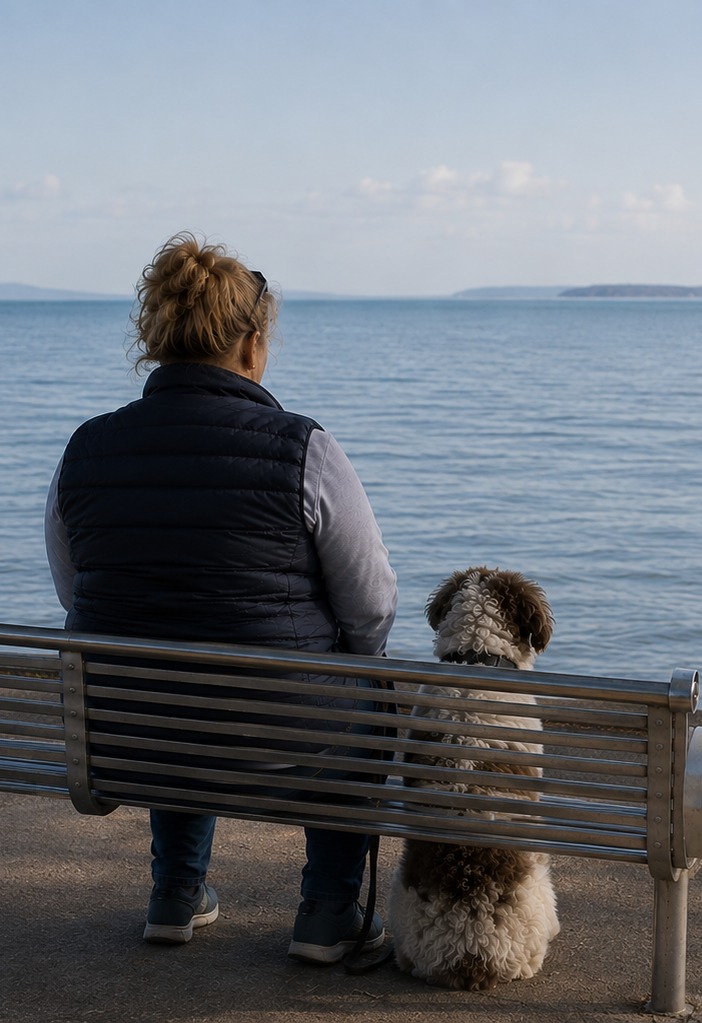
The puppy you dreamed about can sometimes bring more chaos, stress and sleepless nights than you ever imagined.
Should I return my puppy or dog? What to consider when the going gets tough
Some of the hardest calls CLEAR Dog Training receives come from owners who have reached the “beam me up, Scotty” stage. These aren’t usually people who didn’t really want a dog. Often, they desperately wanted one — which makes admitting they may not be coping even harder.
The excitement of bringing home a new puppy or dog has been replaced by exhaustion and frustration. The household is being turned upside down, family members are losing patience and sometimes the owner on the other end of the phone is close to tears.
Then comes the question they feel awful even asking: Should I return my dog? Usually, the first advice is: don’t make that decision today.
Unless there is an immediate safety or welfare issue, this is a decision worth making with a clear head.
CLEAR THINKING
Sometimes perseverance is the right answer. Sometimes another home is. Get help, give the dog a fair chance and give sensible changes time to work. Then be honest about what is best for you, your family and your dog.
Is this a bad patch or a bad match?
There is a big difference between struggling with a new dog and living with a dog that genuinely isn’t right for you.
Puppies in particular can be extraordinarily demanding. Toileting accidents, chewing, mouthing, interrupted sleep and seemingly endless supervision can test even experienced owners.
Many of those problems improve dramatically with training, management and maturity. If you’re still in the early stages and looking for practical ways to make things work, the CLEAR article Bringing home a new dog covers that in more detail.
This article is about the harder question: what happens when you’ve tried and you’re seriously wondering whether this is the right dog, the right home — or the right time?
Before deciding, get experienced help. Make sure you’ve genuinely tried to address what’s making life difficult and get a realistic assessment of what’s likely to improve.
Then give yourself permission to look honestly at the answer.
Sometimes you have to train the family too
A puppy may be one person’s dream, but it has to live with the whole household.
CLEAR has worked with owners who desperately wanted their dog and were prepared to put in the work, only to discover that other family members wouldn’t support even basic training and management.
One person follows the training plan while somebody else ignores it. One is trying to prevent unwanted behaviour while others inadvertently encourage it. Someone leaves shoes or children’s toys lying around, then becomes furious when they’re chewed.
It can make training almost impossible.
Before getting a dog, don’t settle for, “Fine, you can have one.” Find out what that really means. Who will help? Will everyone follow the same basic rules? How much disruption are they genuinely prepared to tolerate?
Sometimes people promise support and the reality turns out differently. If that happens, you may need to train the family as well as the dog.
Everyone doesn’t have to love puppy raising, but they do need to give the dog a fair chance to learn. If they won’t, that has to be part of an honest assessment of whether the placement can work.
Give it a fair chance
If there is a reasonable prospect of things improving, don’t make the decision on the back of one appalling day.
Get help early, put a realistic plan in place and give it time to work. With ordinary puppy or settling-in problems, several weeks — perhaps a month — can give a much clearer picture.
CLEAR is occasionally asked to do a one-session assessment of a puppy or dog in the family home when an owner is genuinely struggling with whether to persevere or return or rehome the dog.
Sometimes what that person needs most is a sounding board — an experienced, independent view of whether the problems they’re facing are likely to be solvable, what could realistically improve with training and management, and whether this particular dog and household are a workable match.
But there is no magic period everyone has to endure.
Serious aggression, safety or welfare concerns, another pet experiencing significant distress, or a situation seriously damaging family relationships may require a much earlier decision.
Giving a dog a fair chance doesn’t mean keeping it at all costs.
Know the exit plan before you need it
For anyone reading this before getting a dog, ask one uncomfortable question: What happens if things don’t work out?
Will the breeder or rescue take the dog back? Is there a trial or settling-in period? What happens to the purchase or adoption price?
Don’t assume you’ll automatically get your money back. Policies vary, and a breeder taking back a dog may face considerable costs caring for, training and eventually rehoming it. If a refund or other condition has been promised, get it in writing.
Knowing the exit plan isn’t expecting to fail. It’s part of thinking through the commitment before bringing a dog home.
If the answer really is no
Sometimes, despite the work, the answer is that this isn’t the right home.
Contact the breeder or rescue first. If the breeder won’t take the dog back, a reputable rescue organisation may be another option, and thankfully there are several good ones in the Brisbane area.
Private rehoming is also possible, including through sites such as Gumtree, but take responsibility for where the dog ends up.
Be completely upfront about what your puppy or dog is really like. Don’t hide behavioural problems to make it easier to place. If it isn’t good with children, cats or other dogs, say so. If it needs considerable training or an experienced handler, say so.
Then vet prospective owners carefully. Do they have the skills to handle this particular dog? Who lives in the household? Do they have the time, patience and lifestyle it needs?
Dogs can be impulse purchases too. Someone falling in love with a photograph doesn’t mean they’ve thought through the next 10 or 15 years.
The aim isn’t simply to find a home. It’s to find the right one.
There isn’t always one right answer
For many owners who reach breaking point, the story has a very happy ending.
Puppies grow up. New dogs settle. Training starts to work. Families find their rhythm. Six months later, the dog that caused sleepless nights and serious doubts may be the dog nobody can imagine living without.
But that isn’t every story.
Sometimes, after getting help, putting in the work and giving things a fair chance, you have to be honest with yourself. The best decision for you, your family and the dog may be another home.
That isn’t a decision to make lightly or on your worst day. But keeping a dog indefinitely in a home where the fit simply isn’t right isn’t necessarily a kindness either.
Another family may have the skills, time, patience and lifestyle that particular dog needs. In the right environment, a dog that struggled in one household may thrive in another.
Sometimes the right decision is to persevere.
And sometimes the responsible decision is to recognise that this dog may have a better life somewhere else.