Sometimes the quickest way to discover who is really in charge is to watch what happens when the dog decides it wants something.
Is your dog a master manipulator?
Check out our list of accidental behaviour chains, give yourself a point for each one that sounds familiar, and see how well your dog has trained you.
Come on now. Be honest.
We spend an enormous amount of time talking about how to train dogs: sit, stay, come, walk nicely, settle down. But there is another side to the relationship that perhaps does not receive quite as much attention.
Dogs train us too, and some of them are extremely good at it.
Dogs are brilliant at noticing patterns. If doing A reliably makes their owner do B, there is every chance they will try A again. The owner may think they are solving a problem, while the dog may have reached an entirely different conclusion.
Welcome to the accidental behaviour chain.
How accidental behaviour chains happen
A behaviour chain is simply a sequence in which one behaviour leads to another and, eventually, to something the dog values.
The problem arises when an unwanted behaviour becomes the first step in that sequence. The owner thinks, “He stopped doing the naughty thing, so I rewarded him.” The dog may think, “Excellent. Now I know how to get the reward started.”
Here are some of the behaviour chains we regularly encounter at CLEAR Dog Training — and a few may look uncomfortably familiar.
CLEAR THINKING
Dogs repeat what works. Sometimes the behaviour we think we are fixing is actually the first step in a chain we are rewarding.
So how well has your dog trained you?
1. Jump up → get told to sit → get a treat
Dog learns: jumping is step one in the treat-delivery sequence.
The owner thinks they are rewarding the sit. The dog may have discovered a perfectly reliable two-step process: jump first, sit second, collect payment.
2. Bark in the backyard → get called inside → get a treat
Dog learns: barking is a very efficient way of ordering room service.
For some dogs, apparently pointless backyard barking suddenly becomes considerably less mysterious once you look at what happens next.
3. Bite the owner’s ankles or hands → a toy appears → instant entertainment
Dog learns: bite human, activate entertainment system.
This is particularly easy to fall into with puppies. The puppy gets mouthy, the owner immediately produces a tug toy, and suddenly the boring human has become tremendous fun.
4. Drop a ball at the owner’s feet → back away and bark → owner throws it
Dog learns: barking operates the human ball-launching machine.
Some dogs become extremely skilled at this. The human may believe they are playing fetch, while the dog may believe they have successfully installed a voice-activated ball thrower.
5. Whine, paw or stare at the sleeping owner → owner gets up → breakfast arrives
Dog learns: why wait for the alarm clock when you can operate the human directly?
Some dogs become surprisingly efficient at moving breakfast earlier and earlier. One little whine at 6 am becomes 5.45, then 5.30, and before long the dog appears to be in charge of daylight saving.
6. Bark or whine because you’re bored → owner says “settle” → briefly settle → receive a stuffed Kong
Dog learns: complain to management and room service eventually arrives.
The owner believes they are rewarding the settle. The dog may have worked out that a brief period of industrial action is what gets the evening entertainment delivered.
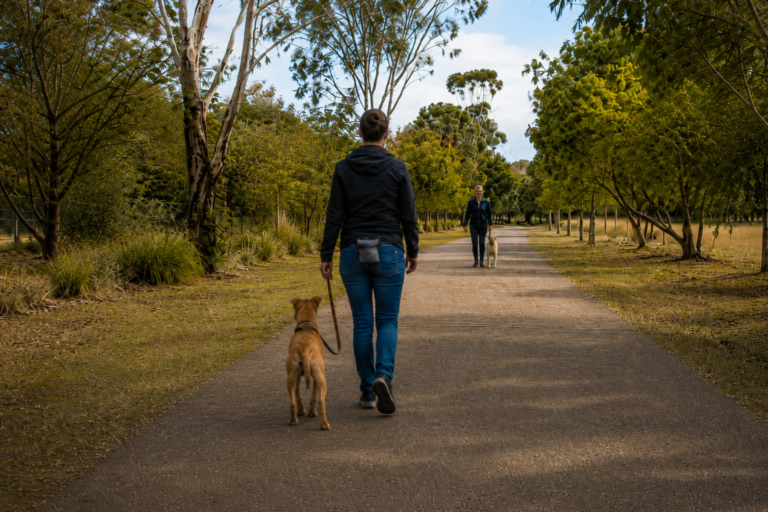
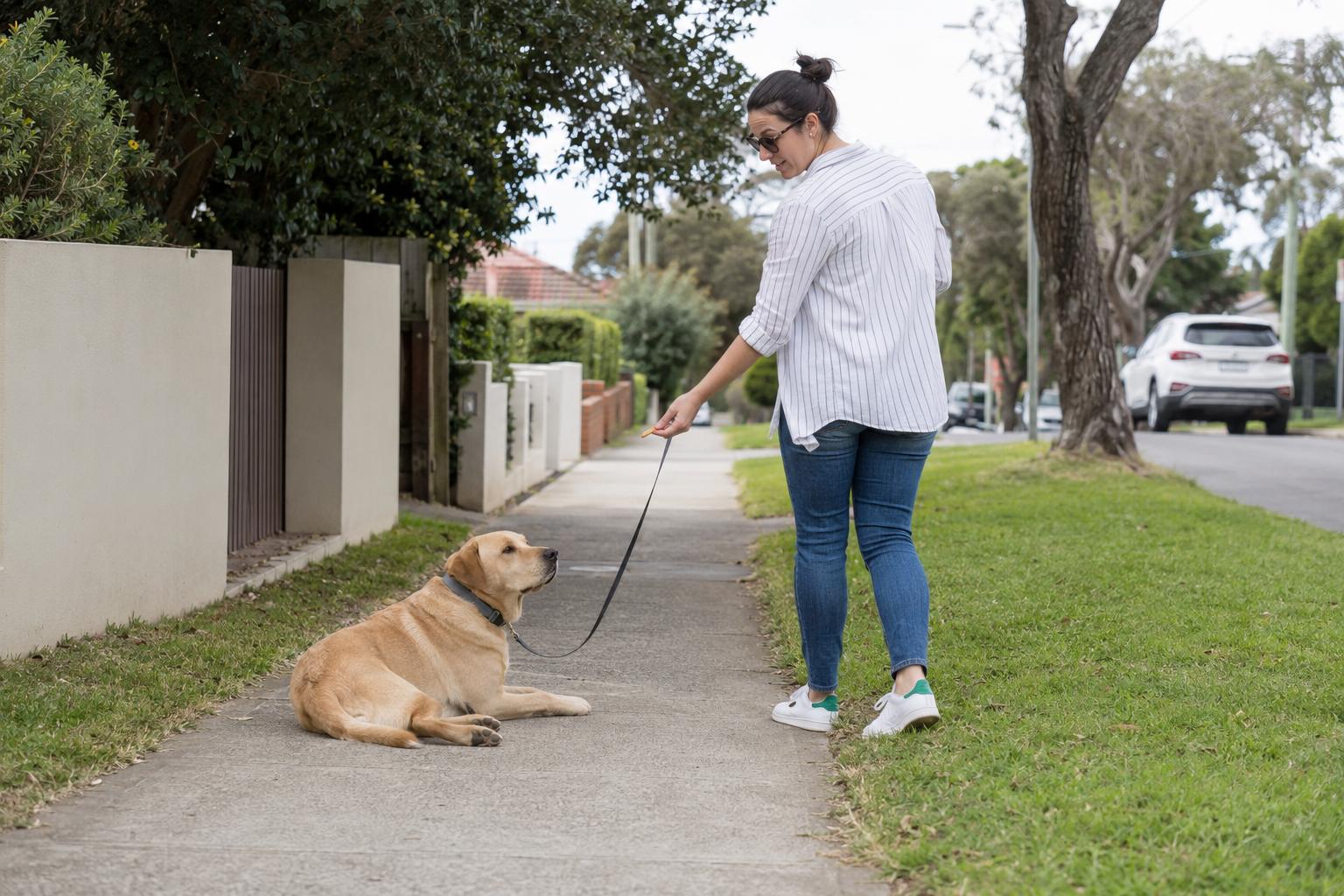
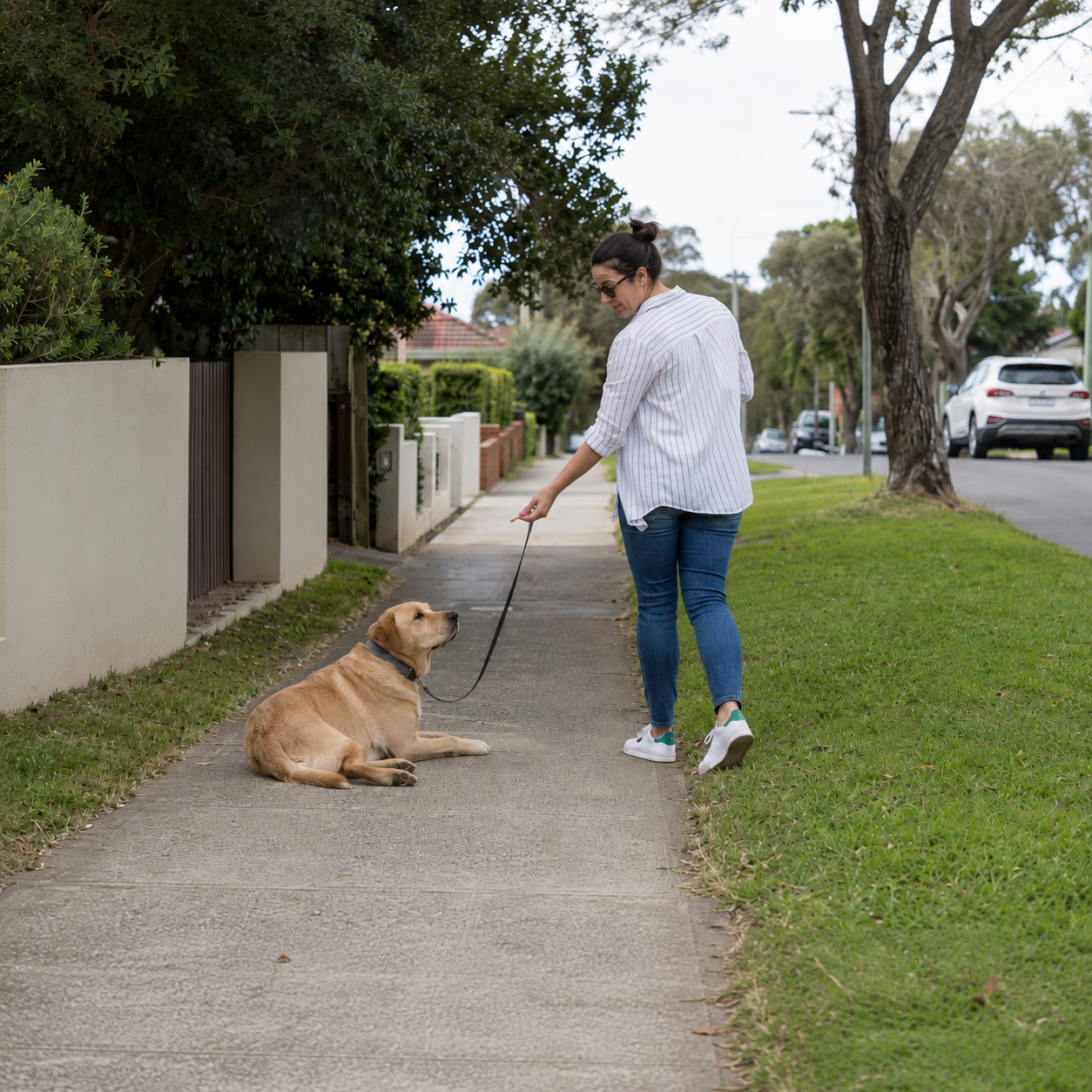
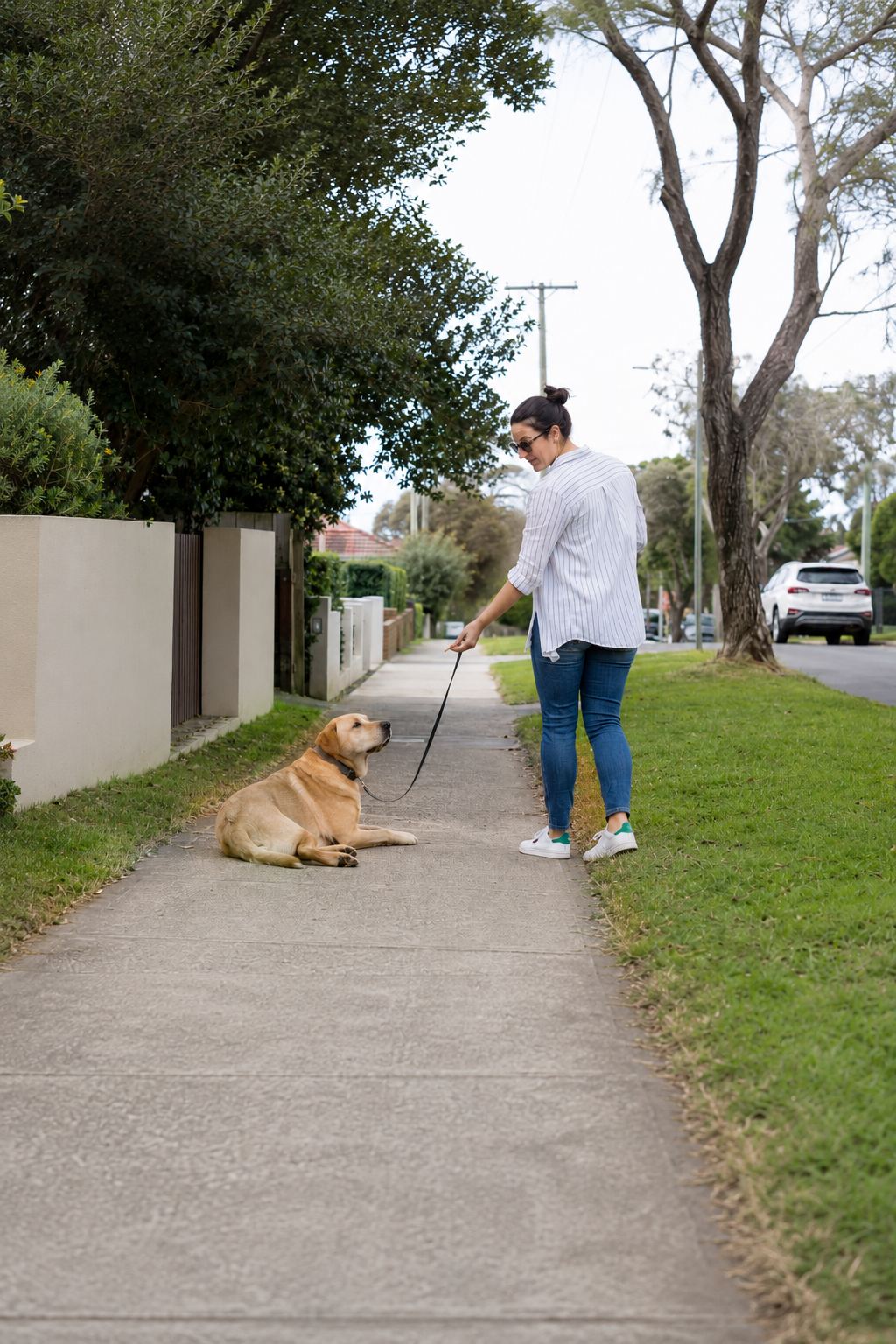
7. Stop or lie down on a walk → owner produces a treat and tries to lure you forward
Dog learns: stopping makes food appear.
This one is extraordinarily common with puppies learning to walk — and Golden Retrievers seem particularly capable of perfecting the art of becoming completely immovable.
The puppy stops, the owner coaxes, the puppy remains planted, and eventually the chicken appears. The puppy takes a few steps, then stops again. At that point, it is worth asking who is really training whom.
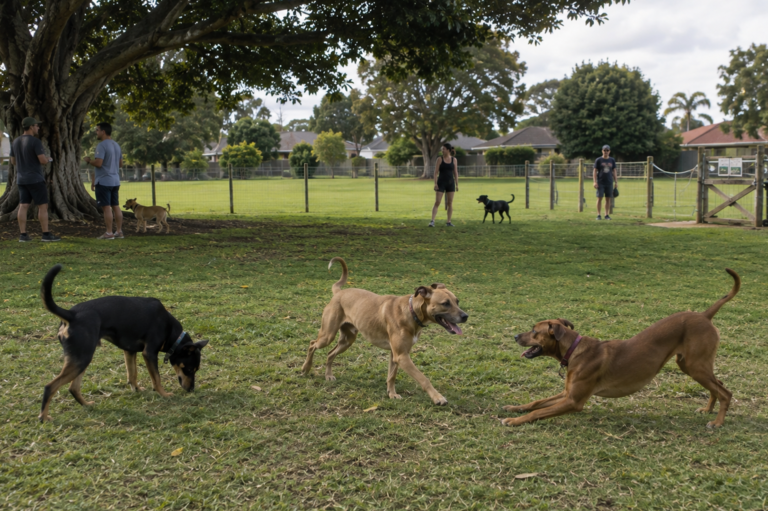
8. See another dog, stop and refuse to move → owner eventually lets you go over and say hello
Dog learns: plant feet, wait, access to dog will eventually be granted.
It only has to work a few times before stopping becomes a very sensible strategy from the dog’s point of view. Next time the owner wants to keep walking, the dog may be perfectly prepared to wait them out.
9. Don’t come when called → wait until the owner appears with treats, a ball or a toy
Dog learns: ignore the first offer. The package improves if you hold out.
The owner calls once, then again. Nothing happens. Eventually they appear waving chicken, squeaking a toy or carrying the favourite ball, and the dog concludes that negotiations have finally reached an acceptable level.
10. Steal something forbidden → human chases → fabulous game begins
Dog learns: socks, tea towels and underwear are especially valuable because they make humans extremely entertaining.
Nothing transforms an ordinary household object into treasure quite as effectively as a human suddenly leaping out of a chair shouting, “Give me that!”
So, how did you score?
0–2: Congratulations. You appear to be training your dog.
3–5: There has clearly been some negotiation over the terms and conditions.
6–8: Your dog has moved into middle management.
9–10: Congratulations. Your dog is a master manipulator. Please report to reception for your performance review.
If you are living with a master manipulator…
The good news is that most accidental behaviour chains are relatively easy to change once you recognise them.
The key is not to let the unwanted behaviour become the thing that makes the reward happen. Try to be proactive rather than reactive.
Start the toy game before the puppy begins biting ankles. Reward a puppy for walking before it plants itself. If greeting another dog is appropriate, let moving nicely towards the dog earn the greeting rather than standing still and refusing to budge.
Also reward the behaviour you actually want whenever you catch your dog offering it without first performing the unwanted part of the sequence.
There is one very useful question owners can ask themselves: What did my dog just do that made me do this?
If the answer is “something I wish they wouldn’t do”, you may just have found the first link in the chain. And if your dog is watching you read this, it already knows you’re onto it.