The right equipment won't train your dog for you, but it can make good training easier, kinder and safer.
Collar, harness or Halti? Choosing the right walking equipment
Walk into any pet shop and you’ll be confronted by an entire wall of collars, harnesses, leads and gadgets, all promising to make walking your dog easier. It’s no wonder owners are confused.
One of the first things we ask new clients to do before a home visit is lay out every piece of walking equipment they own. It’s amazing what appears on the lounge room floor. We often find several different leads, collars, harnesses and training aids that have been bought over the years in the hope that the next one would finally solve the problem.
The reality is that no piece of equipment teaches a dog to walk politely. Good equipment simply makes good training easier.
CLEAR THINKING
The best walking equipment doesn’t control your dog. It simply makes it easier to reward the behaviours you want and discourage the ones you don’t.
Start with a well-fitted harness
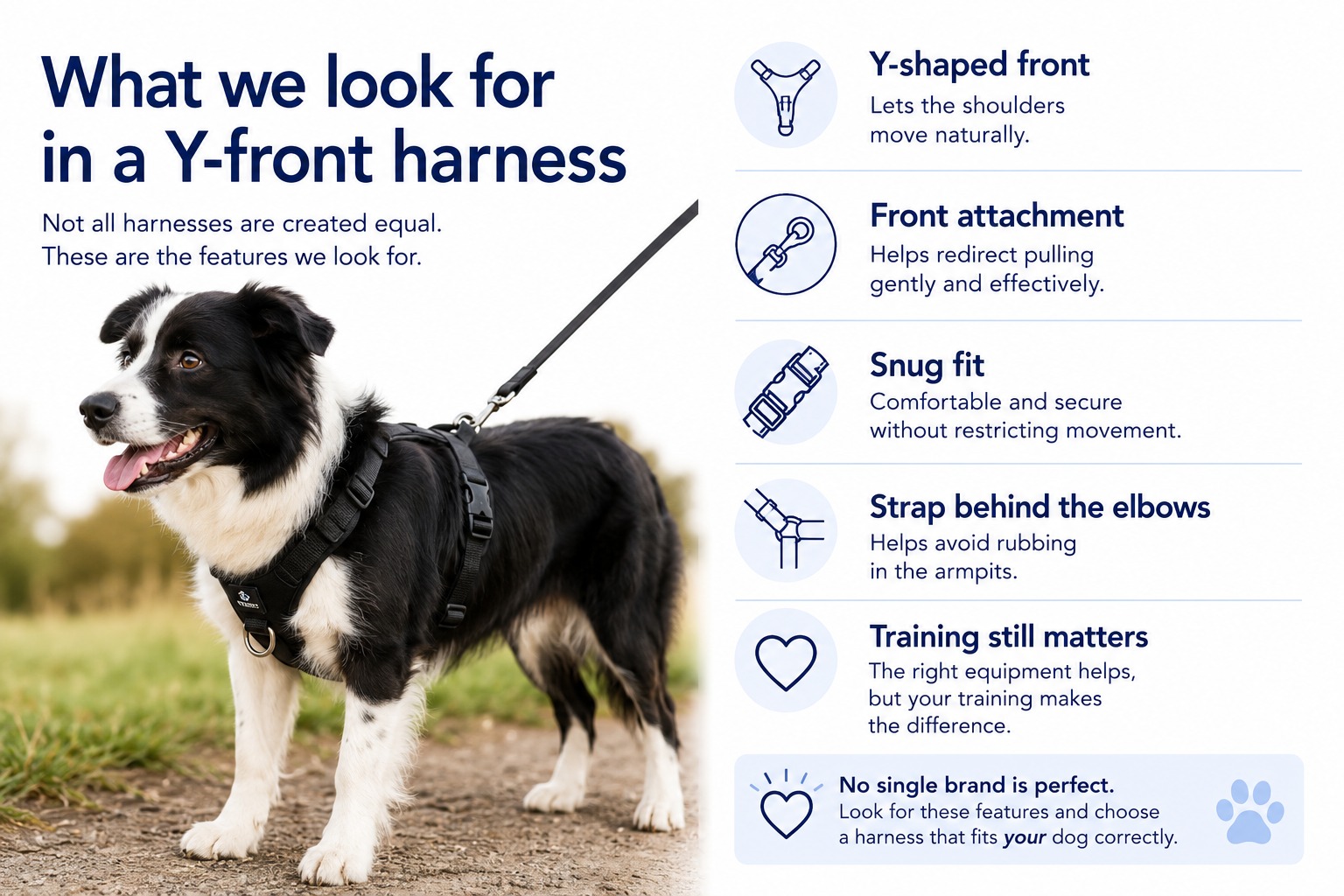
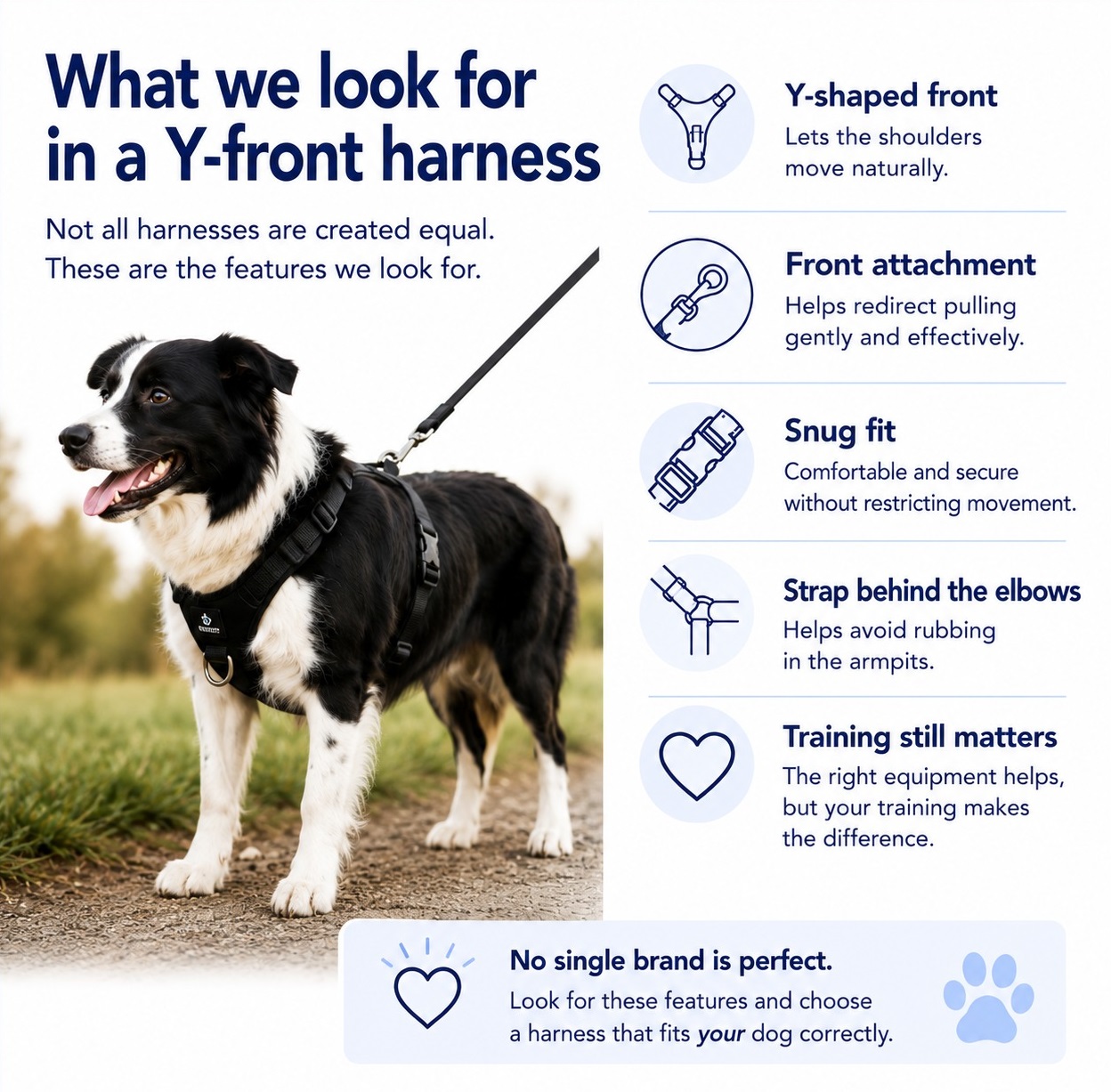
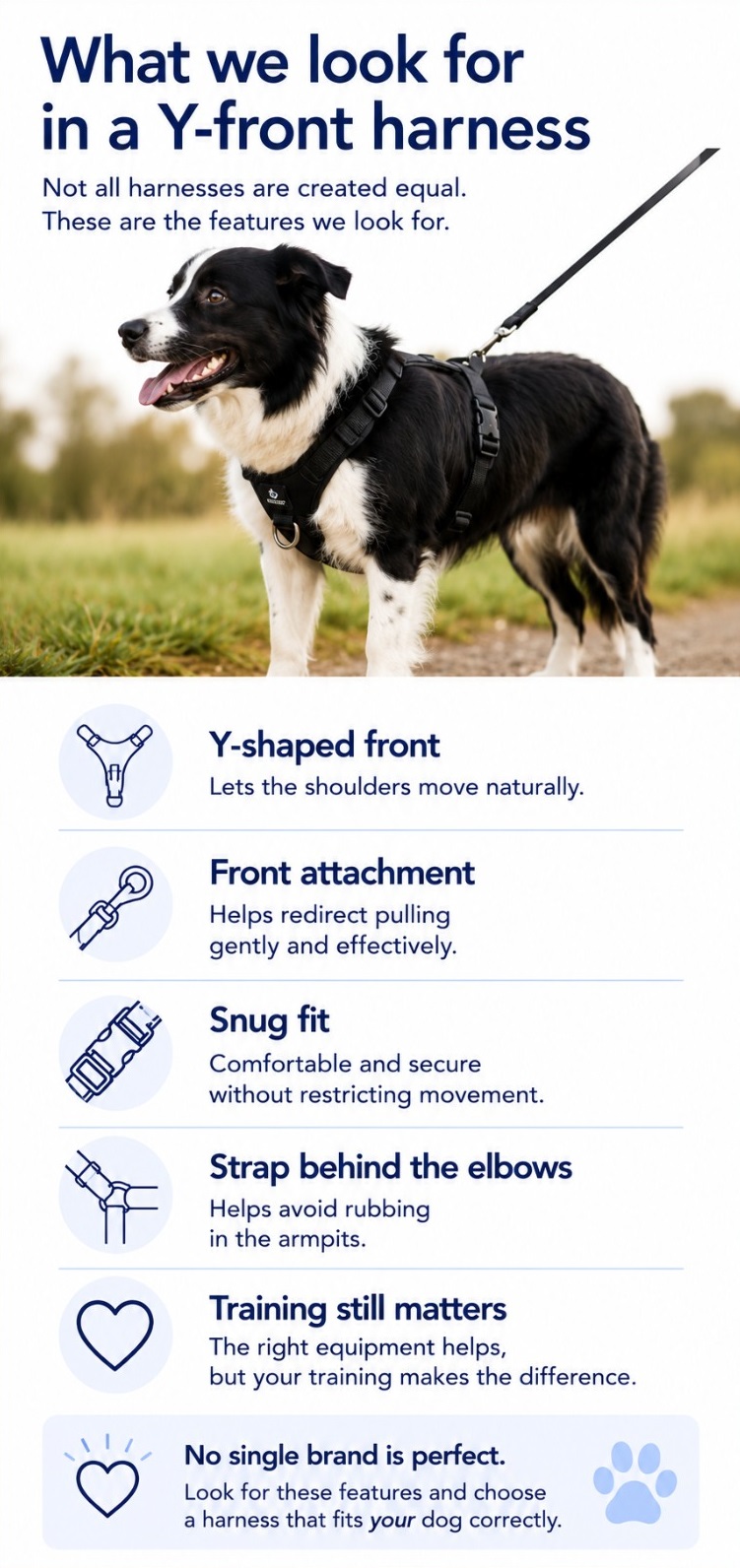
If you’re buying a harness, we’d usually recommend a well-fitted Y-front design. Unlike harnesses with a strap running straight across the shoulders, a Y-front harness allows the dog’s front legs to move more naturally while fitting snugly enough that it doesn’t slide around during the walk.
Whatever equipment you choose, take the time to fit it properly. Gear that’s too loose, too tight or poorly adjusted is less comfortable for your dog and less effective for you.
At CLEAR Dog Training we also like harnesses with a front attachment point. Rather than allowing the dog to lean into the lead and pull harder, the front attachment gives you another way to gently redirect the dog’s movement if it surges ahead.
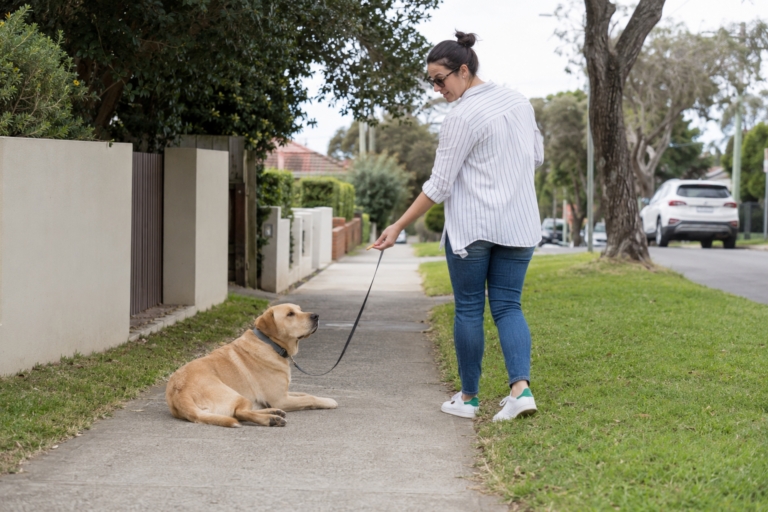
For example, you might briefly stop and wait for the lead to loosen, or you might calmly turn and walk in the opposite direction. Either way, the dog discovers that pulling doesn’t get it where it wants to go, while walking on a loose lead earns praise, treats and the opportunity to keep moving forward.
Training matters more than equipment
The biggest mistake we see isn’t choosing the wrong harness. It’s expecting the equipment to do all the work.
Many owners stop training as soon as they leave the front gate. The treats stay at home, the dog pulls, and everyone simply carries on.
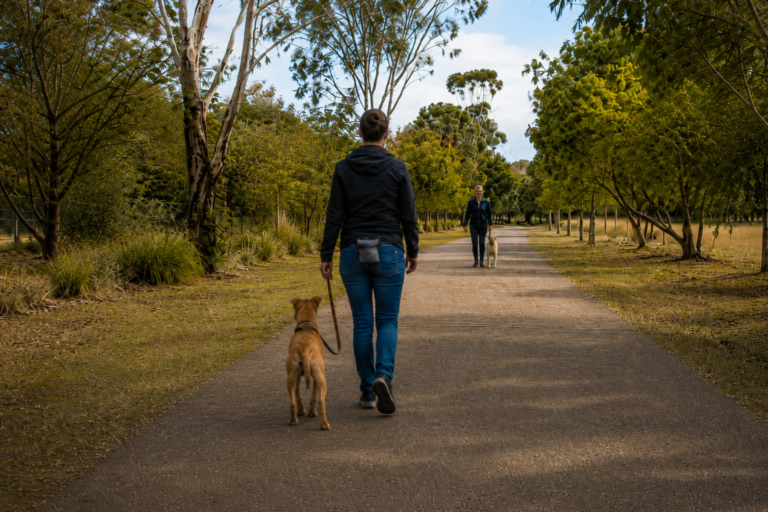
Instead, take treats with you. Reward your dog whenever it chooses to walk beside you, checks in with you or returns to a loose lead. Dogs repeat behaviours that work, so make walking politely worthwhile.
Our recommendation
If you asked us to recommend one setup for most pet dogs, we’d choose a well-fitted Y-front harness with a front attachment. It offers an excellent balance of comfort, safety and control while you’re teaching loose lead walking.
If your current harness doesn’t have a front attachment, don’t automatically replace it. In many cases you can create a temporary front attachment to see whether it improves your dog’s walking before investing in a new harness. Depending on the design of the harness, this might be as simple as looping the lead around the front of the harness and clipping it back onto itself, or using another temporary attachment.
Only if a front-clip harness isn’t giving you enough control would we usually suggest considering a Halti. In our experience, it’s better to master the simpler option first before moving to more specialised equipment.
Where a martingale collar fits
A martingale collar is sometimes called a half-check collar. Unlike an old-fashioned check chain, it can only tighten to a limit that you set, making it a much gentler option while helping prevent some dogs from slipping backwards out of their collars.
For dogs that are escape artists, or for owners wanting a little more security, a properly fitted martingale can be an excellent choice.
If your dog already walks beautifully on a flat collar, however, there’s no need to change. One of the signs of successful training is that you need less equipment, not more.
Introducing a Halti properly
For strong pullers, reactive dogs or owners who need a little extra management while training is still underway, a Halti (dog headcollar) can be an excellent tool.
The secret is to introduce it gradually.
Start at home, where there are no distractions. Put the Halti on for a few seconds, reward generously with treats, then remove it again. Gradually build up the time your dog wears it until it’s happy moving around the house without trying to rub it off.
When introducing a Halti, always have your dog on lead, even indoors. Some dogs immediately try to rub it off on the carpet or launch into a spectacular crocodile roll. If that happens, gently lift the lead just enough to guide your dog’s head away from the floor, then reward as soon as it stops struggling.
Once your dog is comfortable wearing the Halti, begin taking short walks with it on. For the first few outings, you don’t even need to attach the lead to the Halti. Instead, let your dog wear it while you continue walking from its harness or collar.
When you’re ready, use a double-ended lead attached to both the Halti and the harness or collar. Use the harness as your primary point of contact, with the Halti there only when you deliberately choose gentle guidance. This is particularly important for anxious or reactive dogs so that unnecessary discomfort doesn’t add to their concern about a trigger.
The gear people forget
A good lead should feel comfortable in your hand and be strong enough to cope with an unexpected lunge. Cheap leads and flimsy clips might save money initially, but they can become a serious safety risk if they fail.
That lesson became very real for me when my Border Collie Hope was attacked after another dog snapped the pencil-thin lead it was attached to. Quality equipment isn’t about appearances. It’s about keeping everyone safe.
A washable silicone treat pouch is another worthwhile investment because rewards need to be available the instant your dog makes a good decision.
Finally, think about your own footwear. If your dog is still learning, leave the thongs at home. Good enclosed walking shoes provide much better grip and stability if your dog catches you off guard.
Choose wisely, then train consistently
The best walking equipment is the equipment your dog barely notices because it has learned how to walk politely beside you.
Choose equipment that fits well, is comfortable and helps you guide your dog safely. Then put most of your effort into rewarding the behaviours you want to see. That’s what creates lasting change.
Loose lead walking, choosing the right equipment and learning how to use it correctly are all covered as part of the CLEAR Dog Training Foundation Package. We’ll help you decide whether your dog is best suited to a collar, harness or Halti, then show you how to introduce and use that equipment safely, kindly and effectively.
For practical step-by-step training exercises, read our companion article, Teaching your dog to walk on a loose lead.