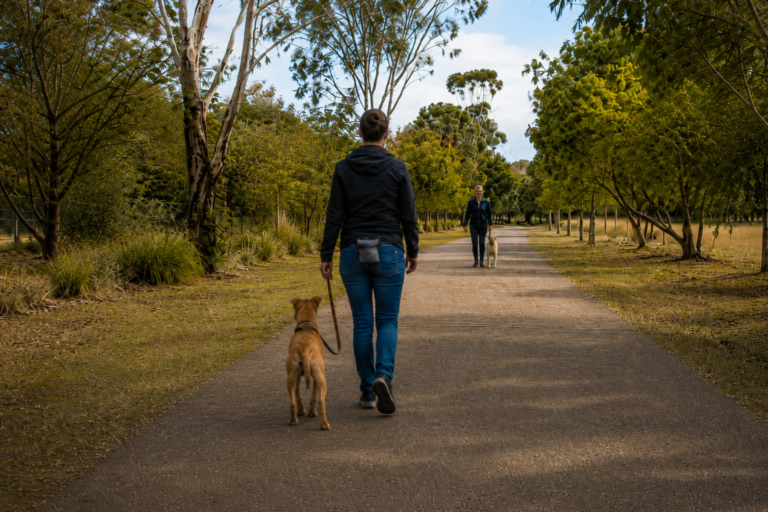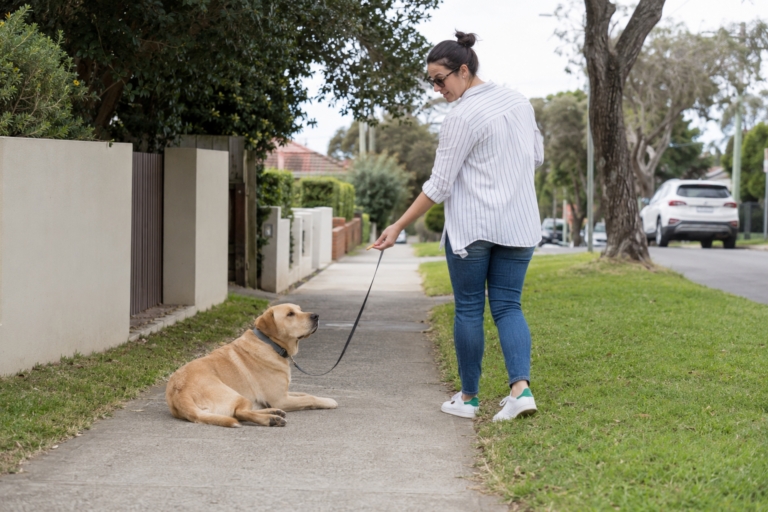
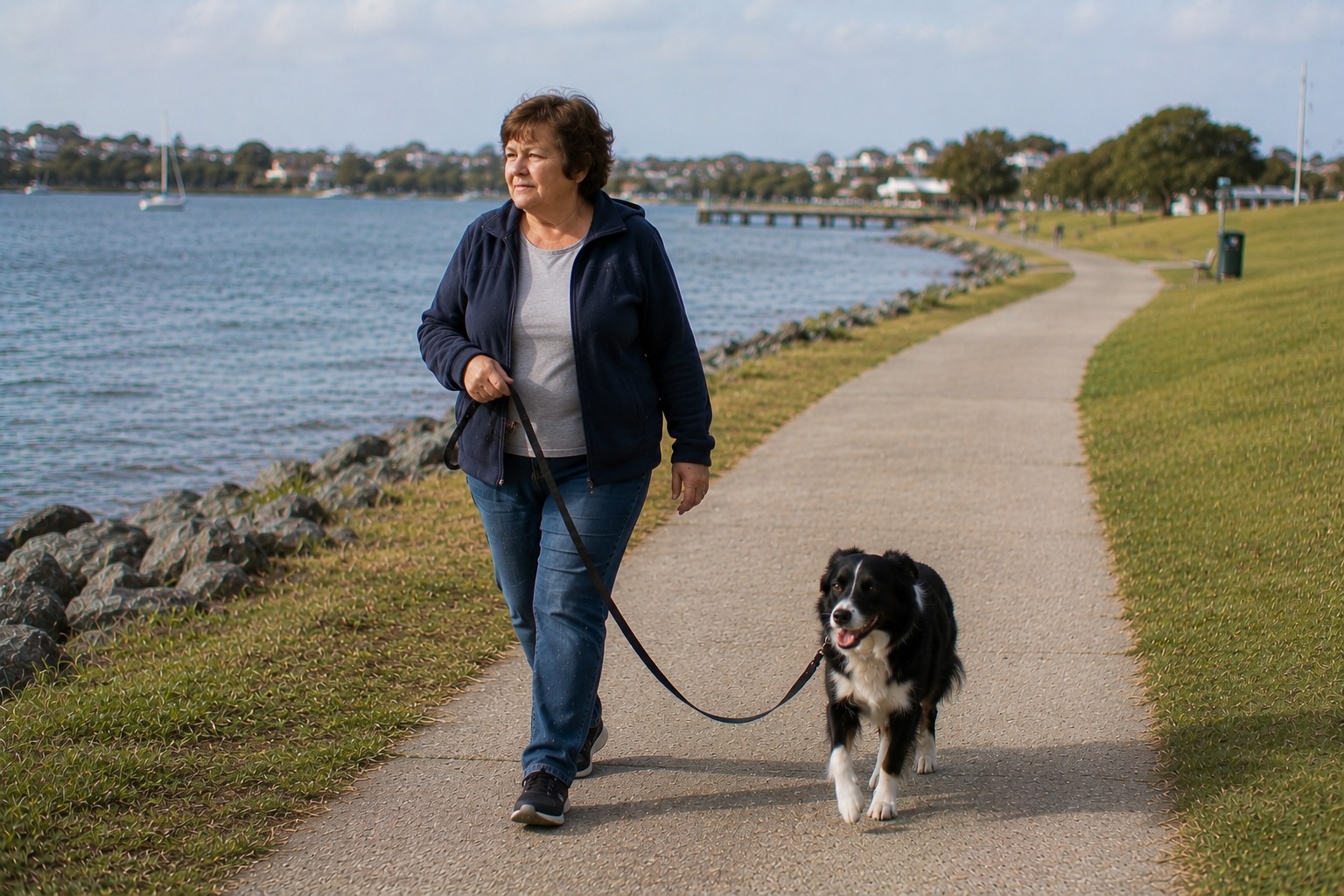
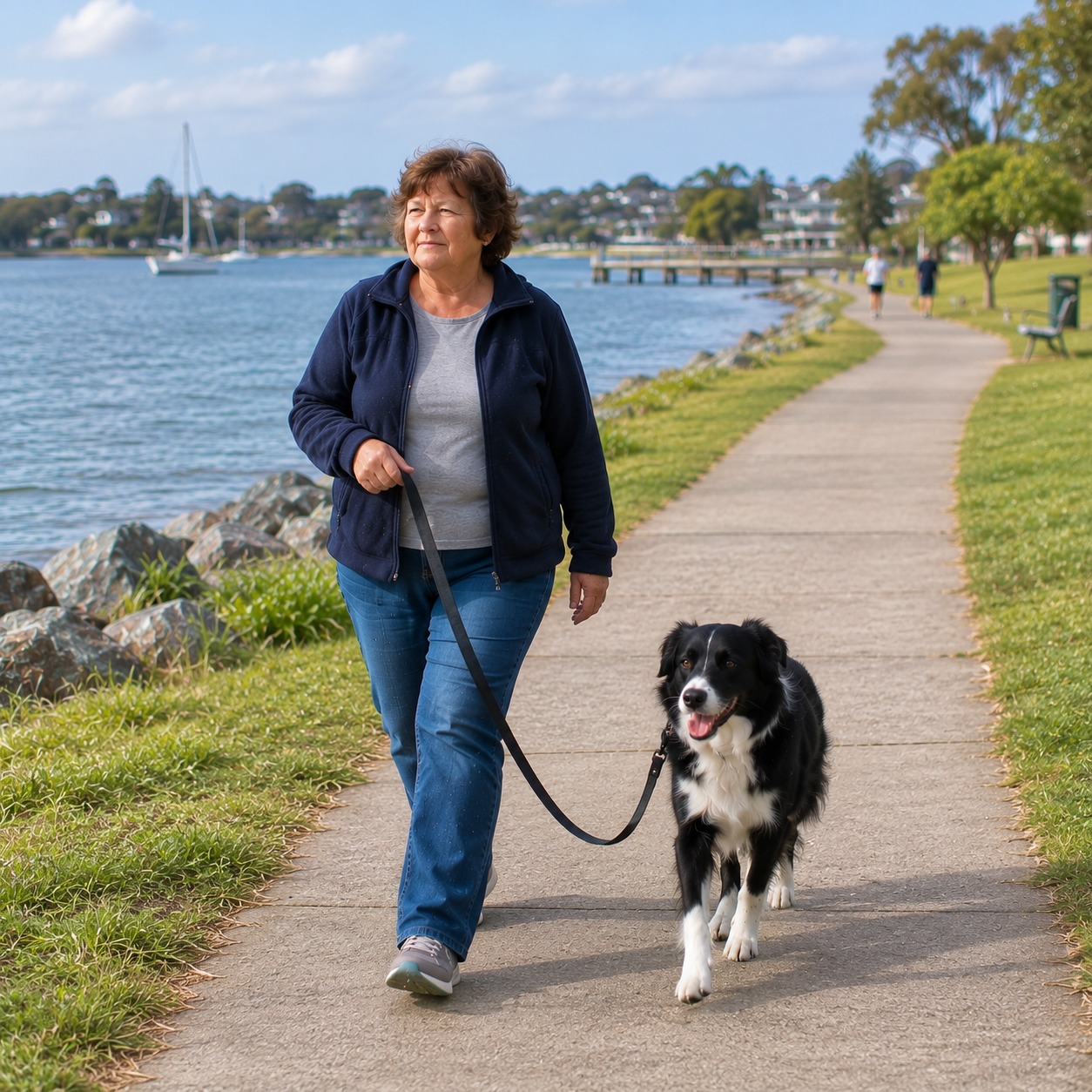
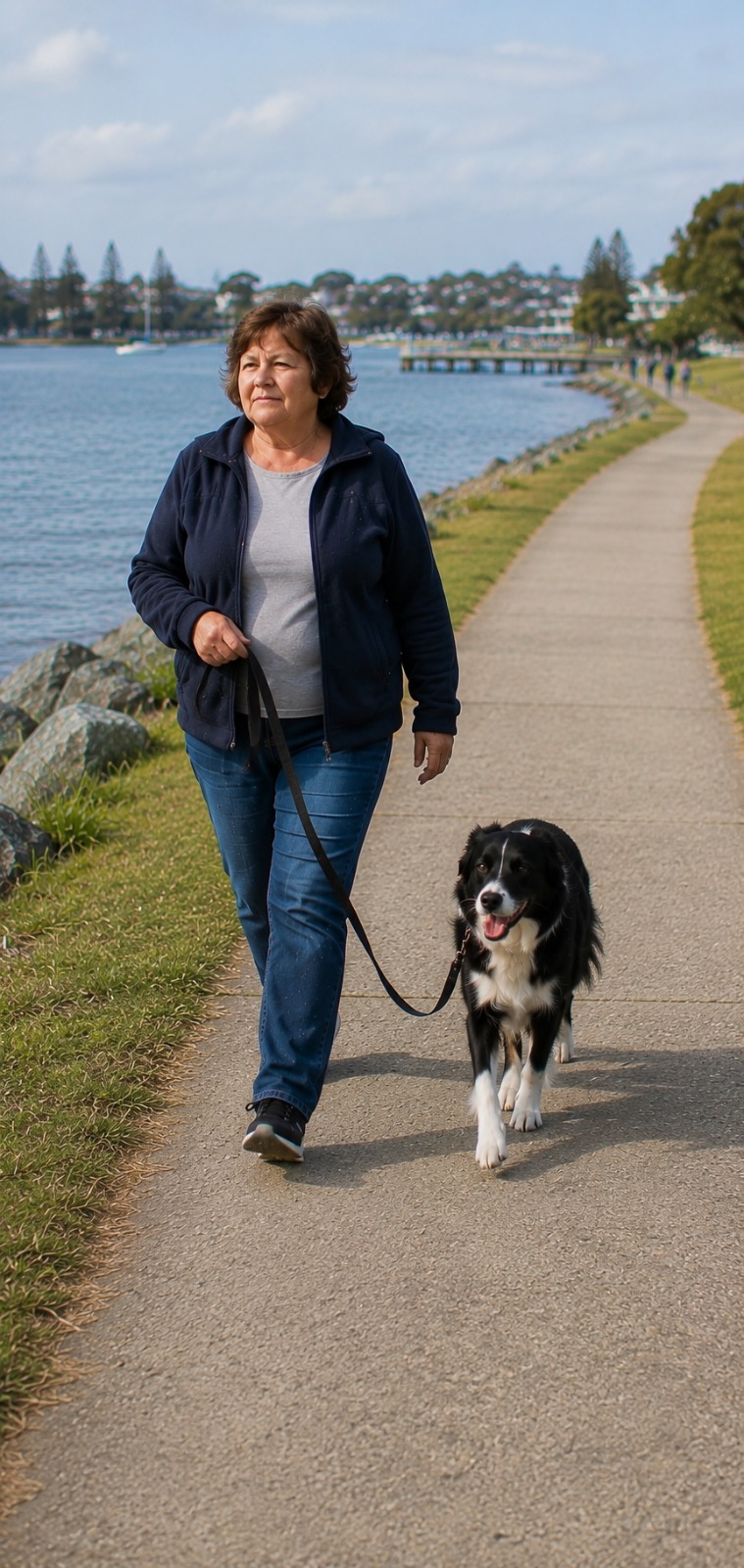
Walking on a loose lead gives both you and your dog the freedom to relax, explore and enjoy the journey together.
Teaching your dog to walk on a loose lead
A walk should be something both ends of the lead enjoy.
Yet for many owners, it becomes a daily tug of war, with their dog straining towards every tree, every smell and every passing distraction. It’s easy to think they’re being stubborn, but the truth is much simpler. Most dogs pull because pulling works.
That’s the good news.
If pulling is learned, then walking politely on a loose lead can be learned too.
The secret isn’t strength or endless corrections. It’s teaching your dog that staying connected with you is what makes the walk rewarding. Once they understand that simple idea, everything changes.
Start where success is easy
Many owners unknowingly make loose-lead walking harder than it needs to be. They step out the front door into a world full of exciting smells, barking dogs, children, birds and traffic, then wonder why their dog can’t concentrate.
Learning works best when success is easy.
Begin somewhere quiet with very few distractions. A driveway, backyard, quiet park or empty footpath allows your dog to discover the game before asking them to play it in the middle of life’s distractions. As they improve, gradually introduce busier environments one step at a time.
Reward the behaviour you want
One of the biggest surprises for professional trainers is how rarely we see owners rewarding their dogs during walks.
Many people carry treats to training classes, then leave them on the kitchen bench when they head out for a walk. Yet the walk is exactly where good decisions need to be reinforced.
Reward your dog while they are walking on a loose lead, choosing to stay with you or checking in of their own accord. Don’t wait until they’ve already surged forward and then try to recover the situation. The behaviour you reward is the behaviour you’ll see more often.
Remember, the walk itself is one of your dog’s biggest rewards. Moving forward, reaching the next interesting smell and continuing the adventure all matter enormously. Don’t be afraid to use the walk as a reward too. Good choices make the walk continue.
Build a simple walking language
Loose-lead walking doesn’t require dozens of commands. Four or five simple cues will handle almost every situation.
“Let’s go” tells your dog it’s time to move with you. “This way” lets them know you’re changing direction. “Wait” creates a brief pause before crossing roads, approaching gates or simply resetting their focus. “Close” asks your dog to walk beside you when space is limited or you need extra control. And “Come” means turn towards me and come to to me.
Used consistently, these cues become part of an easy conversation rather than a stream of instructions.
Not every step has to be heelwork
Think of your walk as having two different modes.
Most of the time your dog can walk comfortably out in front on a loose lead, exploring the world while remaining connected to you.
When you need them close—passing another dog, negotiating a narrow footpath or walking through a busy area—you simply ask for “Close”. Once you’ve passed the distraction, they can relax again. However, you need to practice all these skills without distractions on your walks so giving the dog a cue doesn’t automatically mean exciting or potentially stressful distractions.
Loose-lead walking is not competition heelwork. It’s about enjoying a walk together while remaining polite and responsive.
Let dogs be dogs
One of the pleasures of walking is allowing your dog to investigate the world through their nose.
Sometimes it’s perfectly appropriate to smile and say, “OK, go sniff.”
At other times you’ll ask them to leave an interesting distraction, come with you instead and earn a reward for making that choice.
The goal isn’t to micromanage your dog. It’s to help them make better choices for themselves.
Turn the walk into a conversation
Many owners think the goal is simply to travel from A to B.
Dogs see it differently.
Instead of marching in a straight line, make your walk interactive. Change direction unexpectedly. Practise a few Waits. Ask for Close through a busy section. Play a quick onlead recall game, where your dog earns a reward for choosing to reconnect with you, before continuing on your way.
Your dog begins paying attention because interesting things happen when they stay engaged with you. The walk stops becoming a race towards the next smell and becomes something you do together.
Turns and pauses are your friend
If your dog reaches the end of the lead and charges ahead, resist the temptation to continue walking while they pull.
Instead, calmly change direction.
Sometimes that means simply turning and walking the other way without saying a word. At other times it may mean stopping briefly before continuing once your dog reconnects with you.
The message is simple and consistent.
What I want doesn’t get.
Pulling no longer takes the dog where they wanted to go. Walking politely does. The behaviour you want becomes the behaviour that works.
Over time, your dog discovers that staying aware of you is far more successful than forging ahead on their own.
Don’t have time? Yes, you do.
Training walks don’t have to last an hour.
Even five or ten minutes spent practising good habits will often produce better results than a long walk where pulling is rehearsed from beginning to end.
Short sessions have another benefit too. They teach your dog that leaving the house doesn’t automatically mean maximum excitement. Sometimes you simply step outside, practise a few skills, enjoy a quiet wander and head home again.
That alone helps reduce the frantic anticipation many dogs develop before every walk.
Consistency changes everything
Loose-lead walking isn’t built in a single weekend.
Every walk either reinforces pulling or reinforces staying connected with you. The more consistent you are, the faster your dog understands which behaviour succeeds.
Loose-lead walking isn’t about producing a robot that never sniffs or wanders. It’s about teaching your dog that paying attention to you is the best way to enjoy everything a walk has to offer. Once that lesson clicks, the lead goes slack, the conversations begin, and every walk becomes something both of you look forward to.
CLEAR THINKING
The best-trained dogs aren’t the ones that obey through force. They’re the ones that understand what leads to success.
And if your dog is just too excited to start with? Don’t battle it, just take your dog out and let it chill at your feet while you have a cuppa watching the world go by and getting used to the environment.
A loose lead starts with training, but the right equipment can make learning easier. Read our companion article: Collar, harness or Halti? Choosing the right walking equipment.